Published November 30, 2022
| Version v1
Journal article
Open
Examining the effects of caffeine consumption on the severity of body-focused repetitive behaviors

Description
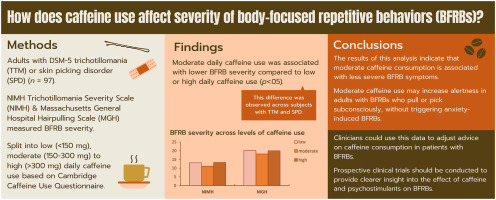
Caffeine has long been discussed in communities of individuals with body-focused repetitive behaviors (BFRBs), a group of compulsive disorders including trichotillomania (TTM) and skin picking disorder (SPD), as a potential trigger for worsening symptoms. While the anxiogenic effects of caffeine have been well characterized, findings from studies on disorders related to BFRBs have yielded mixed results. This study aimed to examine the effect of caffeine consumption on BFRB symptom severity. Subjects reported their caffeine consumption in the past week and completed measures related to BFRB severity and other clinical outcomes. Participants who reported moderate daily caffeine use (150–300 mg) had significantly lower scores on severity scales compared to subjects who reported low (<150 mg) or high (>300 mg) daily caffeine use. The results of this analysis indicate that moderate caffeine consumption is associated with less severe BFRB symptoms. It is possible that moderate caffeine use increases alertness in adults with BFRBs who pull or pick subconsciously, without triggering anxiety-induced BFRBs. Prospective clinical trials should be conducted to provide clearer insight into the effect of caffeine and other psychostimulants on BFRBs.
Files
Examining-the-effects-of-caffeine-consumption-on-the-severity-of-body-focused-repetitive-behaviors.pdf
Additional details
Identifiers
- DOI
- 10.1016/j.psycom.2022.100090
- Other
- oai:uchicago.tind.io:5308